


When you hear the word lingam masáž, you might think of erotic massage, luxury spa treatments, or something out of a tantra retreat brochure. But for men who’ve lived through sexual trauma, it’s something far deeper - and far more fragile. It’s not about pleasure. It’s about safety. It’s about learning, slowly and carefully, that your body can still feel safe - even when touched.
Most people don’t realize that trauma doesn’t just live in your mind. It lives in your muscles, your breath, your nervous system. A man who was abused as a child might know, logically, that he’s safe now. But his body? His body still tenses up at the smell of cologne. Still shuts down when someone reaches for his thigh. Still freezes when a hand gets near his groin. That’s why talking about trauma - even for years - doesn’t always heal it. Sometimes, the body needs to be gently reminded, one touch at a time, that it’s not under attack anymore.
Co je trauma-informovaná lingam masáž?
Lingam, the Sanskrit word for penis, is not the goal here. The goal is reconnection. This isn’t a massage to make you hard. It’s not about orgasm. It’s about helping a man who’s been disconnected from his own body - often for decades - slowly, safely, and with full control, begin to feel again.
Modern trauma-informed lingam massage doesn’t look like what you see in some spas. There’s no music, no candles, no nudity unless the client chooses it. There’s no pressure. No expectations. Just a quiet room, clear rules, and a practitioner who knows how to hold space.
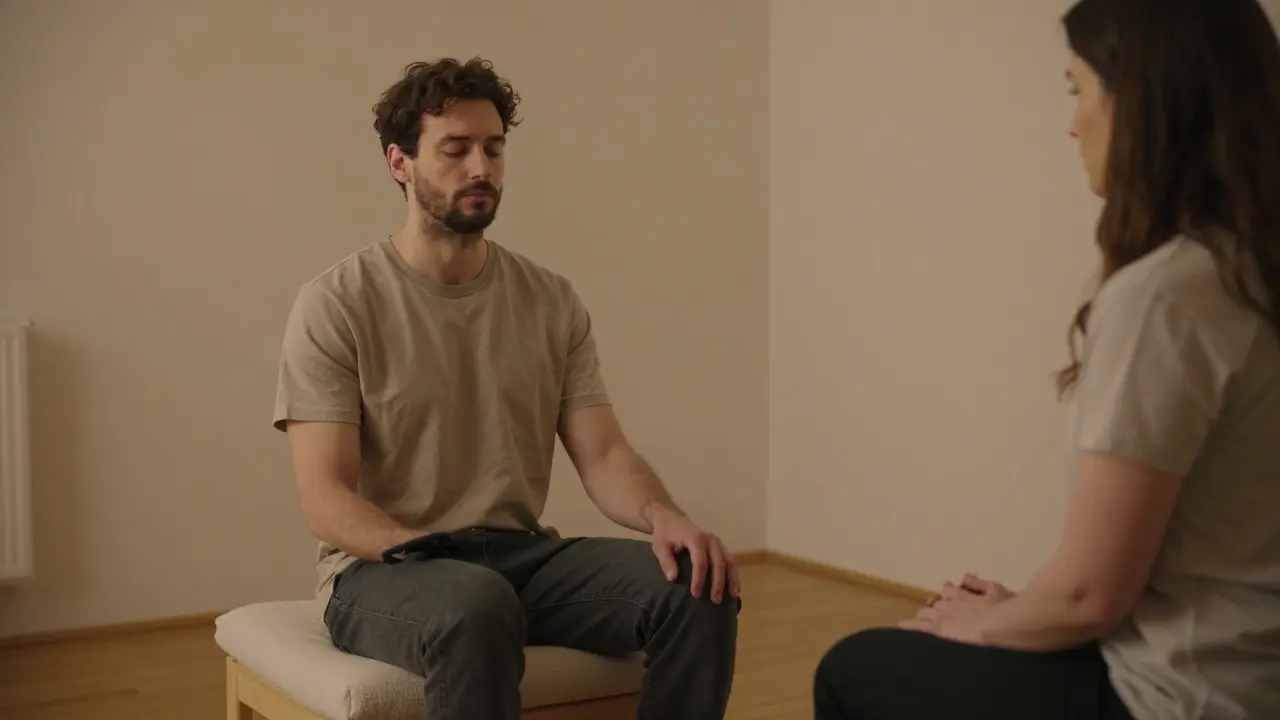
Practitioners trained in trauma-informed care start with a conversation - long before any touch happens. They ask: Why are you here? What scares you? What’s completely off-limits? What word or gesture will you use to say STOP? And they don’t just ask once. They check in before every step. Every breath. Every pause.
One client, a 42-year-old man from Prague, shared after his sixth session: “The first time, I had a panic attack before we even started. The therapist didn’t push. She turned off the lights, asked if I wanted to sit up, and we just breathed together for 20 minutes. That was the massage.”
Proč to funguje - a proč to může selhat
Neuroscience backs this up. When trauma happens, the amygdala - your brain’s alarm system - gets stuck on high alert. The prefrontal cortex, the part that says “you’re safe now,” gets silenced. That’s why talking about trauma doesn’t always help. The body remembers before the mind can process it.
Touch, when given with consent, rhythm, and safety, can help reset that alarm. Studies from the Trauma Center in Boston show that slow, predictable touch can lower cortisol levels, activate the vagus nerve, and help the nervous system shift from fight-or-flight into rest-and-digest. For men with sexual trauma, this is revolutionary.
But here’s the catch: this only works if done right.
Dr. Petra Vávrová, clinical psychologist in Brno, says: “I’ve seen clients come back from bad experiences - not because the massage was bad, but because the practitioner didn’t understand trauma. One man told me his therapist kept saying ‘relax’ when he was dissociating. That made it worse.”
Wrong technique? Trauma can be retriggered. A too-fast touch. A lack of check-ins. A practitioner who ignores a “STOP” signal. These aren’t just mistakes - they’re retraumatizing.
That’s why the Czech Trauma Network’s 2023 survey found that 28% of men who tried somatic work reported negative experiences - not because the method didn’t work, but because the practitioner wasn’t trained.
Co se děje během sezení?
There’s no standard script. Every session is different. But there are non-negotiable steps.
- Před sezením: At least one consultation - in person or online - without any touch. You talk about your history, your triggers, your goals. No pressure. No rush.
- Hranice: You write them down. What’s absolutely off-limits? What might be okay later? What’s okay today? You decide. Not the therapist.
- Signál STOP: It’s not just a word. It’s a hand signal. A tap. A breath. You choose it. The practitioner repeats it back to you. They memorize it.
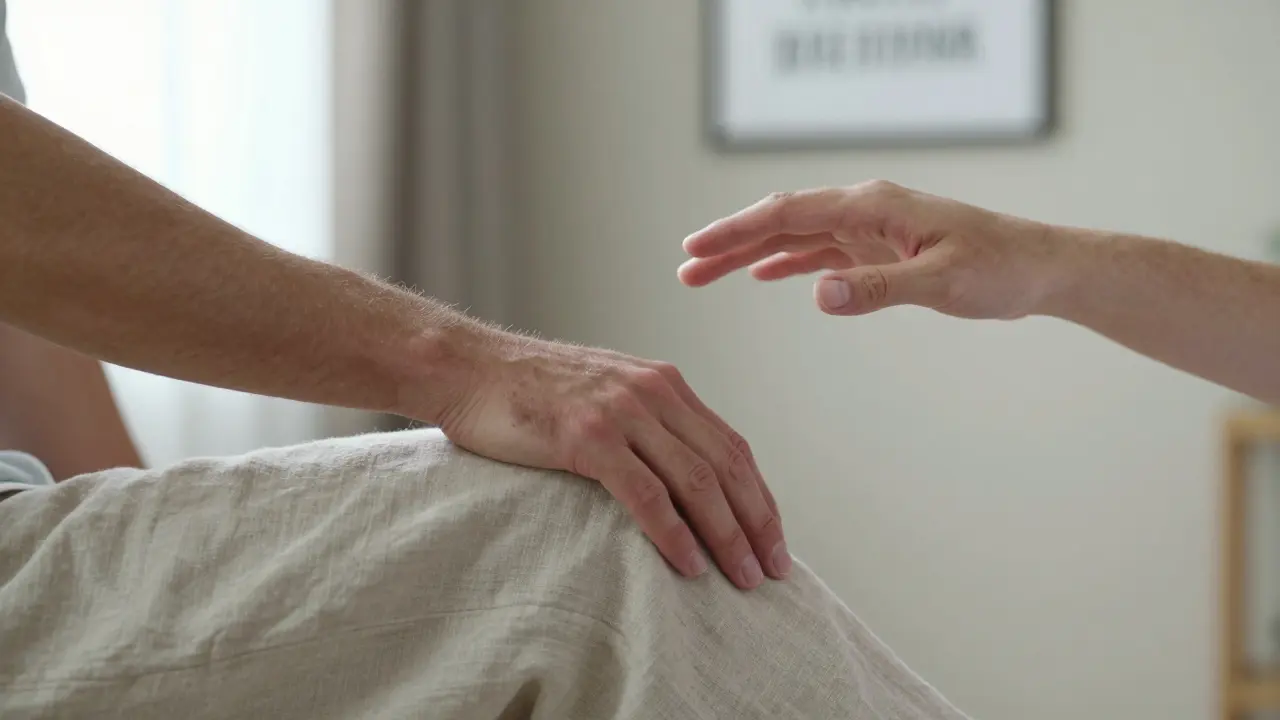
- Průběh: The massage starts with hands on your thighs - not your genitals. It moves slowly. Pauses are built in. You’re fully clothed if you want. You can stop at any time. No nudity required. No pressure to “let go.”
- Check-iny: “How’s your body feeling right now?” “Where do you feel tension?” “Do you want to pause?” These questions happen every few minutes.
- Uzemnění: After the session, you drink water. You sit quietly. You might walk barefoot on grass. You’re not rushed out the door. Integration is part of healing.
One practitioner in Ostrava, who’s certified through the Trauma-Informed Somatic Practice initiative, says: “I’ve had clients who cried for 40 minutes after we touched their inner thigh. They weren’t crying because of pain. They were crying because they hadn’t felt safe in their own skin since they were 10.”
Kdo to může vyzkoušet - a kdo by měl čekat
This isn’t for everyone. And it’s not a first step.
If you’re in acute crisis - if you’re dissociating, having flashbacks, or feeling completely disconnected from reality - this is not the time. You need therapy first. You need stability. You need tools to regulate your nervous system before you invite touch.
Good candidates are men who:
- Have been in therapy for at least 6-12 months
- Can name their triggers
- Have a safety plan (who to call if things get overwhelming)
- Are not seeking this as a replacement for therapy
- Understand this is about healing - not pleasure
Men who are still in denial about their trauma, or who use sex as a way to escape pain, often don’t benefit. In fact, it can make things worse.
Dr. Tomáš Havel from Bohnice Psychiatric Hospital warns: “Without psychological grounding, somatic work is like putting a bandage on a broken bone. It might feel soothing - but the fracture is still there.”
Co hledat u praktikanta
In the Czech Republic, there’s no official license for trauma-informed lingam massage. That means anyone can claim to do it.
But here’s what to look for:
- Certifikace v práci s traumatem: Not “tantra certification.” Not “advanced massage.” Look for training from recognized trauma centers - like the Trauma Center in Boston, or the Czech Trauma-Informed Somatic Practice standard.
- Supervize: Do they meet regularly with a trauma-informed supervisor? If they say “no,” walk away.
- Praxe s trauma klienty: How many clients with sexual trauma have they worked with? A year? Ten years?
- Transparence: Do they give you a written protocol? Do they explain what will happen before you agree? Do they ask for consent at every step?
One client from Brno found his therapist by asking: “Do you have a certificate from the Trauma-Informed Somatic Practice initiative?” She did. He felt safe enough to try.

Ceny a dostupnost v ČR
A trauma-informed lingam session in the Czech Republic costs between 1,500 and 4,500 Kč for 90 minutes. The average is around 2,800 Kč - about 25-30% more than a standard lingam massage.
Why the price difference? Because this isn’t just massage. It’s therapy. It’s hours of preparation. It’s ongoing supervision. It’s liability. It’s the fact that this practitioner has spent 120+ hours learning how to hold space for trauma - not just how to rub a penis.
Only 5% of certified massage therapists in the Czech Republic offer this service. Most of them are based in Prague, Brno, or Ostrava. Outside major cities, options are extremely limited.
But change is coming. In 2023, the Trauma-Informed Somatic Practice initiative launched the first Czech standards. By the end of 2025, they plan to launch a national certification. That’s a big step.
Co dělat po sezení
Healing doesn’t end when you leave the room.
After a session, your nervous system is still processing. You might feel: calm, numb, angry, sad, or completely empty. All of it’s normal.
Do this:
- Drink water - your body is releasing tension.
- Don’t rush. Sit quietly. Don’t go straight to work or social media.
- Write down what you felt - even if it’s just one word.
- Do something grounding: walk barefoot, hold a stone, breathe slowly.
- Call your therapist - or a trusted friend - if you feel overwhelmed.
One man from Plzeň wrote in his journal after his third session: “I touched my own penis today. For the first time since I was 12. I didn’t cry. I just smiled. That’s all.”
Konečné slovo
Lingam massage isn’t magic. It’s not a cure. But for men who’ve lost their connection to their bodies, it can be the first step back.
It’s not about sex. It’s about safety. About control. About reclaiming what was stolen.
And if you’re considering it - do your homework. Find someone trained. Ask hard questions. Trust your gut. If something feels off, it is.
This work is rare. It’s delicate. And it’s one of the few places where a man can be told - without words - that his body still matters. That he still matters. That he is not broken. That he is safe.